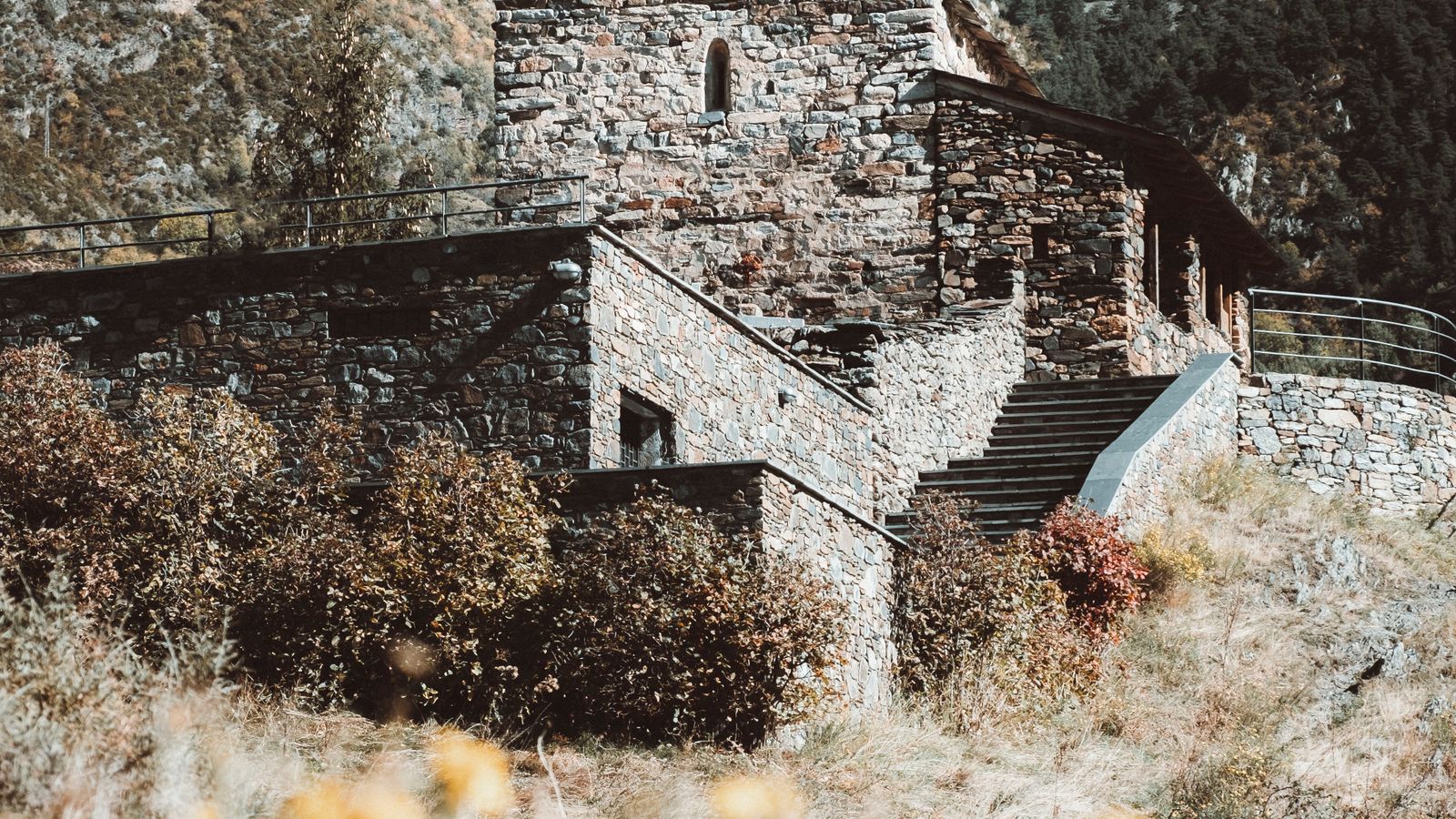
Stone houses in an Andorran village

Andorra Residency for International Professionals: Requirements and Procedure

Marc Cantavella

Marc Cantavella

6 min read

Andorra's residence permit for professionals with international projection (residència per a professionals amb projecció internacional) is designed for consultants, creatives and other independent professionals who want to base their activity in the Principality while serving clients abroad. It belongs to the family of residence permits without work, but it follows its own rules.

Unlike standard passive residency, it does not require the EUR 1.0M investment in Andorran assets. Instead, the applicant must show a viable professional activity, the right qualifications and a refundable deposit with the Andorran Financial Authority.

Who qualifies as an international professional

Under article 98 of the Immigration Law (Llei 9/2012), an international professional is a non-Andorran individual who establishes their main and effective residence in Andorra for at least 90 days per calendar year and carries out a professional activity on the following terms:

  • The seat or base of the professional activity is located in Andorra.
  • The professional has at most one employee in Andorra. This is a ceiling, not an obligation, so the professional can also work alone.
  • The services are mainly provided to people or entities not resident in Andorra. The requirement is met when at least 85% of the services are used outside Andorra.

The permit only covers the activity described above. Any other paid activity in Andorra, whether employed or self-employed, part-time or full-time, requires a separate immigration authorisation.

The quota

Decret 74/2026 sets a quota of 200 residence permits without work, of which 10 are reserved for international professionals. If this category runs out, a permit can still be granted as long as the overall limit of 200 has not been reached. Applications are handled in strict order of filing, with priority for Spanish, French and Portuguese nationals, then EU and EEA nationals.

Economic viability of the activity

Instead of proving passive income, the applicant must show that the professional activity is economically viable and will generate enough resources for them and their dependants for the whole duration of the permit. The evidence depends on the stage of the activity:

  • Existing activity: documents showing the financial situation of the activity, in particular income and expenses for the last closed financial year. These can be the balance sheet and profit and loss account, the income and expense records required in the country of origin, or the last tax return filed in the previous country of residence.
  • New activity: a business plan with projected results for the first three years and an explanatory report on the prospects of the activity, supported by documents that justify the assumptions and figures used.

The activity must also fall within a sector where the Government considers it useful to bring in foreign professionals, in line with the needs of the Andorran economy.
Qualifications and professional experience

The Government grants the permit taking into account the applicant's level of qualification and experience in their sector. The applicant must prove sufficient and accredited training in the field of their activity and proven experience in that sector, by filing:

  • A CV detailing academic background and professional experience in the relevant field.
  • A copy of the documents that prove the training listed in the CV.

The rules do not set a minimum academic level, such as a university degree or a master's. What matters is that the training is relevant to the activity. In our experience, a vocational qualification in the field, combined with a well-documented track record (contracts and invoices with international clients, portfolio, publications or press accreditations), can make a solid file. Foreign diplomas should be apostilled or legalised.

General requirements

The applicant must also meet the general requirements for residence without work:

  • Health insurance valid in Andorra, plus incapacity and old-age cover (minors and over-60s only need health cover).
  • A home in Andorra, owned or rented, meeting minimum habitability standards.
  • No criminal record for intentional offences in Andorra or previous countries of residence.
  • Medical clearance from the Immigration Medical Service.
  • A signed commitment to establish main and effective residence in Andorra and to keep the insurance in force.
  • For non-EU and non-EEA nationals, legal entitlement to enter and move within the Schengen area.

The AFA deposit

The main applicant must deposit EUR 48K with the Andorran Financial Authority, plus EUR 10K for each dependant who obtains the same permit. The deposit is not remunerated, but unlike the passive residency contribution it is refundable.

If the holder leaves Andorra, or if the permit is cancelled or not renewed, the deposit is returned after deducting the AFA's fees, subject to any withholding for obligations still pending in Andorra. The 2026 reform that made the passive residency payment non-refundable did not change these rules.

Step-by-step procedure

  1. Prepare the file. Gather the viability documents or business plan, the CV and diplomas, insurance, housing and criminal record certificates.
  2. File the application with the Immigration Service for the main applicant and any dependants.
  3. Review and medical examination. The Immigration Service checks the file, may request further documents, and the applicant attends the Immigration Medical Service.
  4. Make the AFA deposit. Once the file is approved, the Immigration Service notifies the amount, and the bank certificate of the deposit allows the permit to be issued.
  5. Register with the comú (parish council) where you live within three months, or the permit is cancelled.

Duration and renewals

The permit follows the same timeline as passive residency. It is granted for two years, renewed for two years and then for three-year periods, with ten-year renewals once the holder has had the permit for seven years. Spanish, French and Portuguese nationals receive three-year renewals after the initial permit and ten-year renewals after five years.

At each renewal, the activity must still meet the conditions of the initial permit, in particular the 85% of services used abroad and the limit of one employee. Keeping clear records of invoicing by client and country makes renewals much simpler.

Family members

The spouse or registered partner, dependent parents, minor children and adult children under 25 who are studying can obtain the same permit alongside the main applicant or later through family reunification. The activity must generate enough resources for the whole family.

Speak with our Andorra residency expert

The international professional permit is one of the most attractive routes to Andorra for independent professionals, but approval depends on how the activity, the qualifications and the client base are presented. Our team in Andorra la Vella, led by economist and lawyer Marc Cantavella, prepares these files and assesses beforehand whether your profile fits this route or another permit.

Book a consultation with our expert or write to secretary@theglobalwealth.com, and we will review the viability of your case.

Sources:

  • Llei 9/2012, qualificada d'immigració, articles 32, 33, 90, 91, 98 and 99.
  • Decret 407/2025, Regulation on residence permits without work, articles 9, 11, 15 and 16.
  • Decret 74/2026, quota of residence permits without work.
Marc Cantavella

Manager at The Global Wealth

International Tax Lawyer and HNWI Relocation Expert. Co-founder and Manager at The Global Wealth.